
Bhagjogni
If you grew up in Mithila, you probably remember evenings when the dark fields suddenly filled with tiny blinking lights. Children ran after them with…
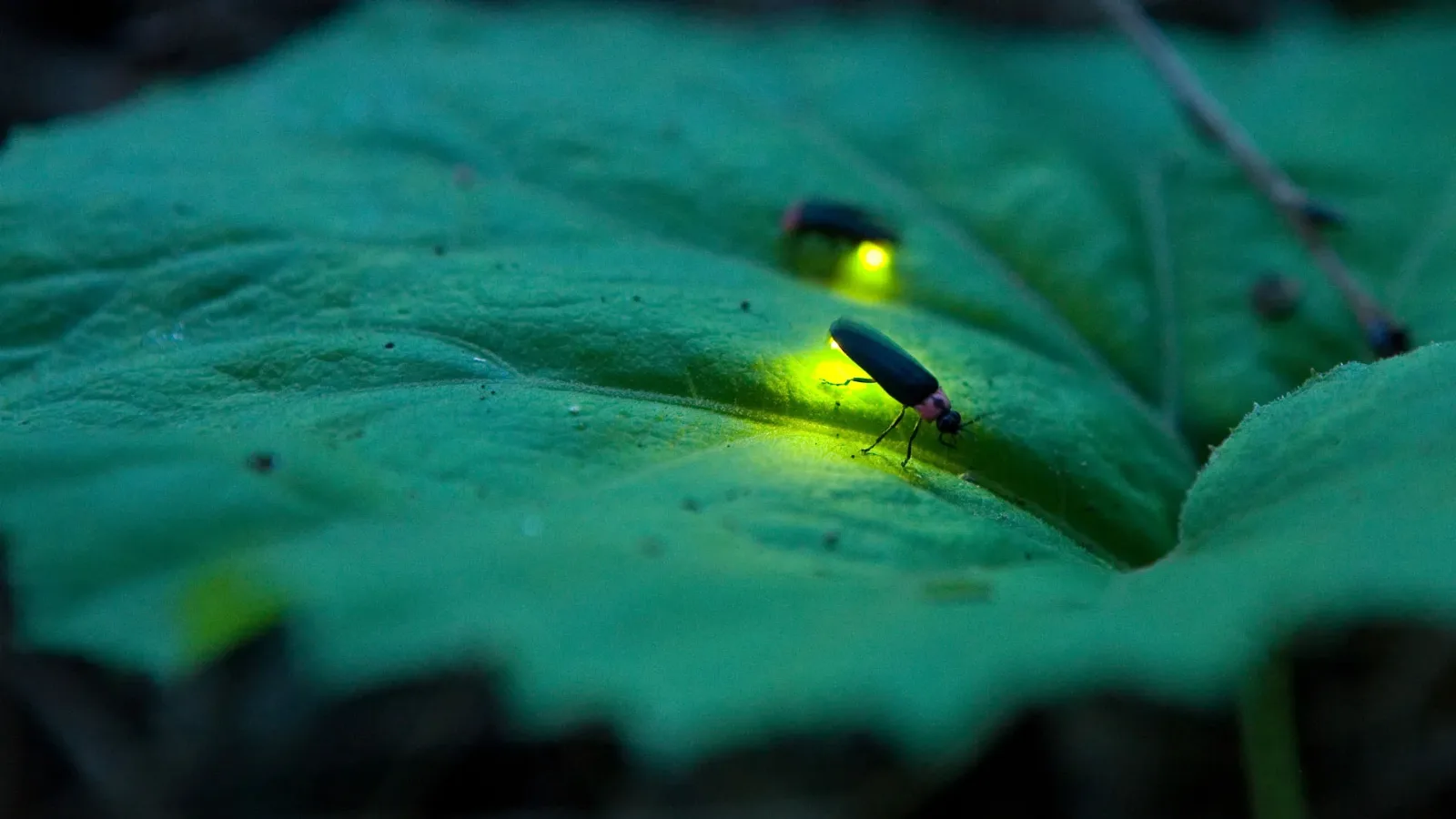
If you grew up in Mithila, you probably remember evenings when the dark fields suddenly filled with tiny blinking lights. Children ran after them with cupped hands. Elders called them bhagjogni (भागजोगनी). In English, they are fireflies.
If the word is new to you, a bhagjogni is a small beetle that makes its own light. If you already know the word, ask yourself when you last saw one. For a lot of us, it has been years. I wrote this for both kinds of readers.
What is a bhagjogni?
Despite the English name, a firefly is not a fly. It is a soft-bodied beetle. Its light comes from a chemical reaction inside its body, between a molecule called luciferin and an enzyme called luciferase. Almost none of the energy turns into heat, which is why the glow is cold. You could hold one and feel nothing.
The flashing is how they talk to each other. Each species has its own pattern. Males fly around flashing, and females, usually sitting in the grass, answer back. That is how they find each other in the dark. The light also seems to work as a warning, since many fireflies taste bad to predators.
There are more than 2,000 species in the world. People in different places have their own names for them. Hindi speakers say jugnu, Nepali speakers say junkiri (जुनकिरी), and in Bengali it is jonaki. In Mithila, it is bhagjogni.
The part of their life we never see
What we see is only the last stage. A bhagjogni begins as an egg laid in damp soil or leaf litter. It then spends most of its life, anywhere from several months to a couple of years depending on the species, as a larva underground. The larvae hunt snails, slugs and earthworms, and many of them glow too. Then comes the pupa stage, and finally the adult.
The adult stage is short, often just a few weeks. Many adults eat very little, and some do not eat at all. They are mostly busy finding a mate.
This is why my childhood plan never had a chance, which I will get to below. A firefly in a bottle needs more than food. It needs the damp grass and soil it grew up in, and it does not have long anyway.
Bhagjogni in our life
I grew up in Kathmandu, so bhagjogni were not part of my everyday evenings. They belonged to our trips to the Terai during Chhath. Back then they seemed to be everywhere. Over the rice fields, near the ponds, in the bushes and trees, even in our own courtyard. In the evening we sat outside with the family and watched them drift around in the dark.
My siblings, my friends and I could not leave them alone. We chased them, caught them in our hands, and put them in a bottle to use as a tiny lantern.
One year I decided to take some back to Kathmandu to show my friends at school. Every time, they died on the way. I had no idea what a bhagjogni eats, so I could not feed them. I laugh about it now. Looking back, it was my first lesson in how delicate these little creatures are, though I did not understand it then.
Why do we hardly see them now?
Bhagjogni is not extinct. But ask anyone who grew up with them and you will hear the same thing: there are far fewer now. Firefly researchers around the world say the same, and the biggest threats they name are habitat loss, light pollution and pesticides. I have seen all three in the places I remember.
Land is the first problem. Fireflies need damp soil, grass, ponds and quiet field edges. Open land keeps turning into houses and roads, and the larvae, which live in the soil for up to two years, cannot survive a field that has been paved or dug up.
Then there is light. Streetlights, house lights and shop signs drown out the flashing that fireflies use to find mates. The land can stay the same, but if the night is too bright, they cannot find each other.
Pesticides are a quieter problem. The larvae eat snails and slugs, so what we spray on farms and gardens ends up in their food, or in their bodies directly. Drying ponds and changing rain make it worse, since fireflies need moisture.
None of these is a single cause that we can point at. They add up, and a creature that needs this many things to go right does not take it well.
What we can do
You do not have to be a scientist to help. Leave a patch of grass, wet soil or a small pond alone. Switch off outdoor lights you do not need. If you must have them, use dim, warm ones that point down. Use less pesticide in the garden or field, and leave fallen leaves where they are, because that is where the larvae live.
And if you see one, enjoy it where it is. A bhagjogni in a bottle will not last the night, but one left in its field can light up many more evenings.
Teach the children the name too. I would like it to stay a word people use.
A small light worth keeping
Bhagjogni does not ask for much. A bit of darkness, some water and clean soil. If we can give it that, it might come back to the same fields where our parents saw it, and where I once tried, and failed, to carry it home.